2026-2027 Graduate Public Service Fellowship
Graduate Public Service Fellowship Program
Haas Center for Public Service
NOTE: APPLICATION DEADLINE EXTENDED TO JUNE 17, 2026
Description
In partnership with the Office of the Vice Provost for Graduate Education, the Haas Center for Public Service offers the Graduate Public Service (GPS) Fellowship as a space for graduate students to cultivate their skills, commitments, and identities as community-engaged scholars.
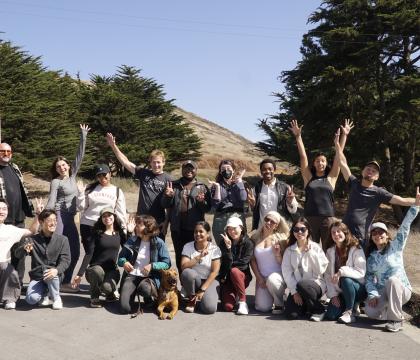
The GPS Fellowship creates a supportive, transdisciplinary network of students who share an interest in public scholarship, scholar-activism, and community engagement. Through the fellowship experience, students participate in a community of practice designed to promote relational and reflective learning and a community of purpose that supports the explicit discussion of values and identities and the exploration and application of social, intellectual, and political commitments to scholarly practice.
The GPS program embraces and encourages participants to bring their whole selves into the fellowship experience (including their personal experiences, values, and standpoints) in order to nurture identities and commitments as community-engaged scholars. Cohort activities emphasize collaborative learning, relational skill building, and reflection on values and positionality because such practices are essential for building trust and fostering equity-focused collaborations with community partners in ways that are transformational rather than transactional.
The GPS fellowship program integrates a practicum experience in which Fellows serve in teams (with grad student peers) on a collaborative, action-oriented research project with a local community-based organization or coalition partner. Projects will fall within one of the following thematic areas:
- Health Equity
- Educational Equity
- Environmental Sustainability/Justice
- Housing Justice/Affordability
The experience is designed to provide Fellows with the opportunity to participate, from start to finish, in a research design process that is driven by the community partner’s interests, needs, or desires and that prioritizes core equity-based principles such as shared goals and values; a focus on community strengths (asset-based); equitable collaboration; collective benefit; trusting relationships; and accessible results. Fellows are expected to commit approximately 2 hours per week over the course of the academic year to the project. Fellows may express interest to participate in a project that addresses community-identified issues in one of four key areas: environmental sustainability, housing equity, educational equity, or health equity.
GPS fellows receive a $3,000 stipend over the course of the academic year to support their participation in the fellowship and the fellowship-related research project.
Whether you are interested in a future faculty position, or planning to pursue a non-academic career pathway, the GPS experience provides space to explore the intersection of your professional and community-engaged goals and to integrate public scholarship practices into your professional repertoire.
HOW TO APPLY
The application deadline for the 2026-27 GPS fellowship has been extended to June 17, 2026. Questions? Contact Clayton Hurd (churd@stanford.edu) or Manuel Rosaldo (mrosaldo@stanford.edu).
- Participate in bi-weekly cohort seminars throughout the academic year to build knowledge and skills in the theories, methodologies, ethics, and design strategies of equity-focused, community-engaged research through guest speakers, discussions of seminal scholarship, case studies, and collaborative reflection on practice, values, and skill development
- Collaborate with graduate student peers in the co-design and carrying out of a team-based, community-driven research project in partnership with a local community organization or coalition (building on existing community partner relationships with the Haas Center)
A complete application includes the following:
- application form
- curriculum vitae
- unofficial transcript
- endorsement from primary graduate advisor(s) - see application for more details on what this entails
Stanford graduate students from all departments and programs who are considering careers in higher education or in professional fields that integrate and value community engagement are eligible to apply. Through academic accomplishments, commitment to community work, and teaching/mentoring experience, candidates must demonstrate potential to become successful community-engaged scholar-practitioners.
For additional information, please contact Clayton Hurd at clayton.hurd@stanford.edu.