2026 Archaeology Field Experience: Archaeological Field Methods and Conservation
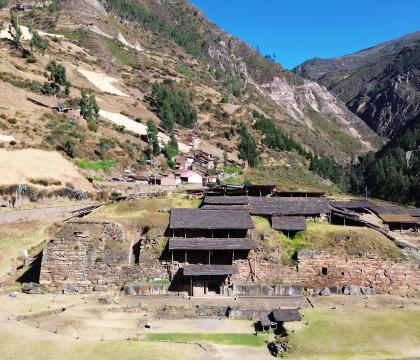
Chavín de Huántar is a UNESCO World Heritage site in the Central Andes of Peru. The site is a ceremonial center consisting of major temple mounds, plazas, and an intricate labyrinth of underground passageways of galleries and canals. Located in the north-central highlands of Peru, Chavín has long been recognized as the key site for understanding the beginnings of later Andean states and empires like the Inca. In particular, Chavín seems to have been a cult center where priestly leaders went to exceptional lengths - including using hallucinogenic drugs and manipulating light and sound within mystifying complex architecture - to convince elite Andean contemporaries of the validity of their supernatural authority.
The basic goal of the Chavín field experience is to give Stanford students field training in a broad range of archaeological research methodologies, taking advantage of the operation of Associate Professor Emeritus John Rick’s major archaeological project in the World Heritage site of Chavín de Huántar. For seven weeks from June - August 2025, students will participate in major excavations, including those on the surface of the original drainage canals, as well as in newly discovered underground spaces. Researchers' efforts will be split between investigation, in which we are pursuing intellectual goals for understanding the past of the site, and conservation, in which we are trying to improve the perspectives for this monumental site’s survival into the future.
Familiarity with conversational Spanish is highly recommended for participation in this field experience.
Accommodations, dietary needs, and other individual travel details will be discussed at a later time if your application is accepted. Please contact the Student Services Officer, Kira Salazar, atksal@stanford.eduwith any questions, concerns, or information you would like to share.
- Archaeological excavation
- Archaeological record-keeping
- Photography and photogrammetry
- Surveying and documentation
- Cultural exchange and Spanish language
Eligibility
- This field experience opportunity is open to all undergraduates except graduating seniors.
- Undergraduates from all majors are encouraged to apply.
- No prior knowledge of archaeology is required, although we prefer to support students who will pursue an archaeology-centered career. All necessary training will be provided while in the field.
- Applicants will need an updated passport by the time of acceptance that does not expire within 1 year of the trip. This is very important.
- Acceptance to the Peru field experience comes with funding for eligible expenses subject to the budget of the project. Housing, daily meals, and materials used on-site will be fully covered by the project. The Archaeology Center will issue a stipend to students to purchase flights based on the real costs of flights to and from their field site. Students will be informed of the stipend limit prior to booking. Per university policy, the Archaeology Center does not pay for personal travel outside the dates or locations of field experiences.
- If the this field experience is run remotely, accepted students will receive stipends from VPUE. Stipend amounts will be determined by VPUE and communicated to students when they are accepted to the field experience.
- Students who plan to participate in an archaeology field experience cannot receive a major grant or a Chappell-Lougee scholarship within the same academic year as their field experience.
Requirements
- Pre-departure meetings: Students accepted to our field experiences are required to participate in meetings with the faculty leader of their program in the quarter prior to departure. Each field experience has different pre-departure requirements that will be communicated by the faculty leader.
- SURPS application: Upon their return, the Archaeology Center requires that all field experience students apply to SURPS (Symposia for Undergraduate Research and Public Service). Students from each field experience are expected to work together to complete an application and present at the SURPS event the following spring, if selected.
- Yearbook entry: Upon their return, students are expected to submit a 300+ word summary of their experience with several photos for the Archaeology Center yearbook.
- Participation: Each of our field experiences is part of an ongoing research project led by a Stanford faculty member. While in the field, undergraduates are expected to contribute to the team effort of the archaeological project at the faculty member's direction. Fieldwork can take the form of a number of different activities, from clearing undergrowth in preparation for excavation to laboratory analysis of archaeological samples. Each day's activities can look different, and may change depending on the evolving direction of the research. Students participating in a field experience should be prepared to be flexible and responsive to the instructions of the faculty member or other senior project staff.