2026 Archaeology Field Experience: Museums, Heritage, and Storytelling
South Africa’s protracted heritage crisis is part of a global challenge of cultural preservation in resource-constrained environments: the heritage of marginalized communities is under- or unsupported due to resource constraints and institutional barriers. As in other countries, indigenous knowledge systems are documented without consent, refugee communities are estranged from heritage materials, and post-conflict communities struggle to rebuild cultural identity from fragments. Too often, heritage preservation operates through extraction models: academics or institutions collect, catalog and control community cultural materials. Communities become subjects rather than partners, excluded from decisions about their own heritage. Such dynamics tend to perpetuate colonial power structures even within well-intentioned preservation efforts.
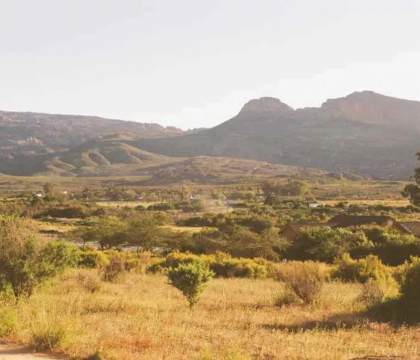
Students will become familiar with South African pasts beyond history and archaeological textbooks but in relation to heritage institutions, marginalized groups and less trafficked locations. They will gain an overview of South African heritage in both a broader and a specific sense, gaining orientation in the well-established infrastructure of metropolitan Cape Town and Bloemfontein before applying their knowledge to the rural Karoo. This will render a very different sense of heritage and public-facing curation. Students will develop a sense of what it means to tell stories out of museum objects and archival documents. They will cultivate a sense of humility in curating the stories of others, working collaboratively in all phases, and respecting the priorities of community partners.
In practical terms, students will master ArcGIS, Excel/Sheets and other software programs by way of developing digital exhibits and telling heritage stories. Via expert consultations, they will sharpen a sense of user experience both for schools and museums materials. Insights will be practically applied to their own projects, to be developed for inclusion in Archive to Narrative.
Accommodations, dietary needs, and other individual travel details will be discussed at a later time if your application is accepted. Please contact the Student Services Officer, Kira Salazar, atksal@stanford.eduwith any questions, concerns, or information you would like to share.
- Digitize items from their collection, including photography, photogrammetry and 360-degree photography
- Create related metadata, with a view to both archival and display purposes
- Pursue archival related research, both on site and at national archives (including Western Cape Archives in Cape Town)
- Conduct stakeholder interviews on site
- Undergo the process of designing a website by way of digital exhibit
Eligibility
- This field experience opportunity is open to all undergraduates except graduating seniors.
- Undergraduates from all majors are encouraged to apply.
- No prior knowledge of archaeology is required, although we prefer to support students who will pursue an archaeology-centered career. All necessary training will be provided while in the field.
- Applicants will need an updated passport by the time of acceptance that does not expire within 1 year of the trip. This is very important.
- Acceptance to the South Africa field experience comes with funding for eligible expenses subject to the budget of the project. Housing, daily meals, and materials used on-site will be fully covered by the project. The Archaeology Center will issue a stipend to students to purchase flights based on the real costs of flights to and from their field site. Students will be informed of the stipend limit prior to booking. Per university policy, the Archaeology Center does not pay for personal travel outside the dates or locations of field experiences.
- If the this field experience is run remotely, accepted students will receive stipends from VPUE. Stipend amounts will be determined by VPUE and communicated to students when they are accepted to the field experience.
- Students who plan to participate in an archaeology field experience cannot receive a major grant or a Chappell-Lougee scholarship within the same academic year as their field experience.
Requirements
- Pre-departure meetings: Students accepted to our field experiences are required to participate in meetings with the faculty leader of their program in the quarter prior to departure. Each field experience has different pre-departure requirements that will be communicated by the faculty leader.
- SURPS application: Upon their return, the Archaeology Center requires that all field experience students apply to SURPS (Symposia for Undergraduate Research and Public Service). Students from each field experience are expected to work together to complete an application and present at the SURPS event the following spring, if selected.
- Yearbook entry: Upon their return, students are expected to submit a 300+ word summary of their experience with several photos for the Archaeology Center yearbook.
- Participation: Each of our field experiences is part of an ongoing research project led by a Stanford faculty member. While in the field, undergraduates are expected to contribute to the team effort of the archaeological project at the faculty member's direction. Fieldwork can take the form of a number of different activities, from clearing undergrowth in preparation for excavation to laboratory analysis of archaeological samples. Each day's activities can look different, and may change depending on the evolving direction of the research. Students participating in a field experience should be prepared to be flexible and responsive to the instructions of the faculty member or other senior project staff.